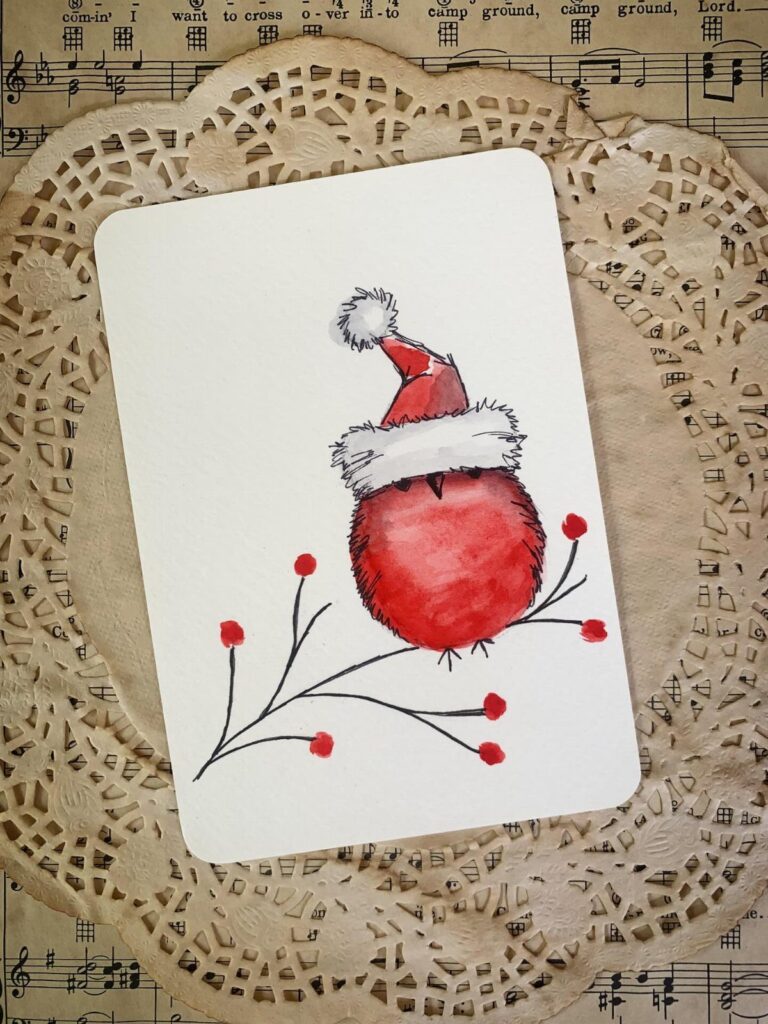
Which card to paint first depends on how much patience you have for drying time, since the range runs from gift tags finished in a minute or two to an angel that needs a dark blue sky dry before the figure goes on.
Beginners should start with a simple shape like mistletoe, a snowflake or an ornament, and repeat it until the water amount feels automatic. Whatever you choose, 140 lb watercolor paper matters more than the paint, because it takes washes without buckling.
1. Watercolor Christmas Trees Card
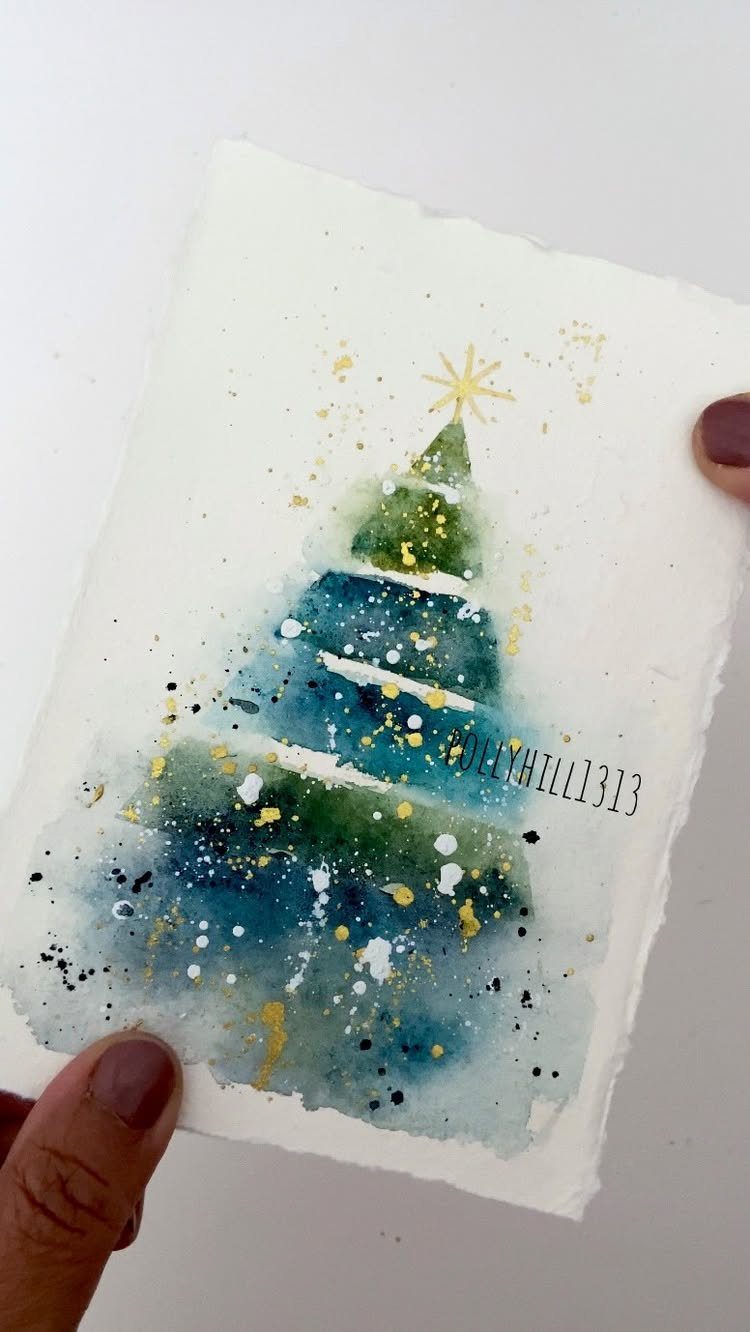
A stylized tree is the easiest watercolor Christmas card to repeat, since a few overlapping strokes of blue and green make the whole shape. Paint a batch in one sitting so the colors match across the set.
Let the paint dry fully before flicking gold splatters over it, or the gold will bleed into the tree.
The creator behind this one posted 8 cards in total, one for every day of the week, which shows how well a single design repeats with small changes.
2. Easy Christmas Wreath Watercolour Card
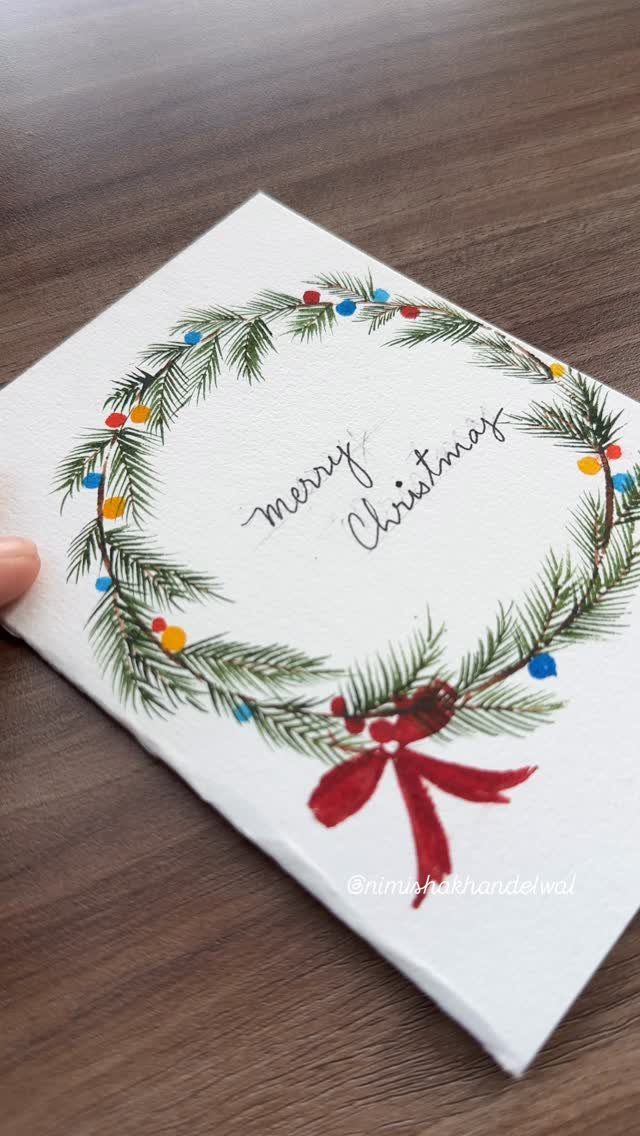
A wreath rewards patience more than skill. Start with a loose ring of green, let it dry, then paint a second layer of leaves over it for depth.
Add the ornaments and the red bow last, once the greenery is dry, so the colors stay clean. Leave the center open for lettering, and I would write the greeting in pen after everything else is done.
3. Mistletoe Watercolour Card

Mistletoe suits beginners because the shapes are forgiving: paired oval leaves, a few small white berries, and a ribbon to tie them together. Leave the berries as bare paper, or lift them out with a damp brush.
A red ribbon is the one strong color, so keep the greens soft and let the bow carry the card. Pencil in your message lines first, then paint around them.
4. Snowflake Watercolour Card
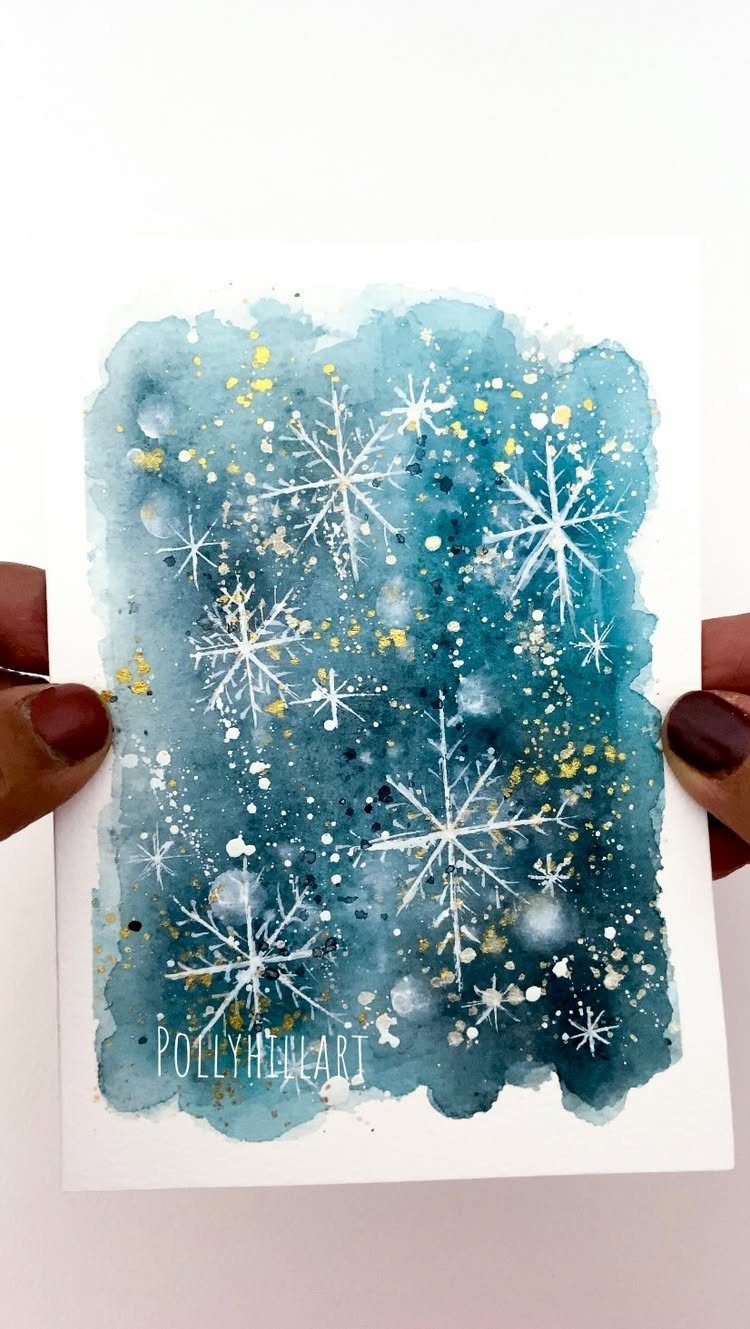
White snowflakes on blue only work if the white sits on top of a dry wash. Paint the blue and teal background first, wait until it is fully dry, then add the flakes with opaque white paint or gouache.
Watercolor alone won’t show up over a dark wash, so I would pick an opaque white for this card. Finish with gold splatters, tapping the brush over the page instead of flicking it, if you want fewer stray specks.
5. Angel Watercolour Card
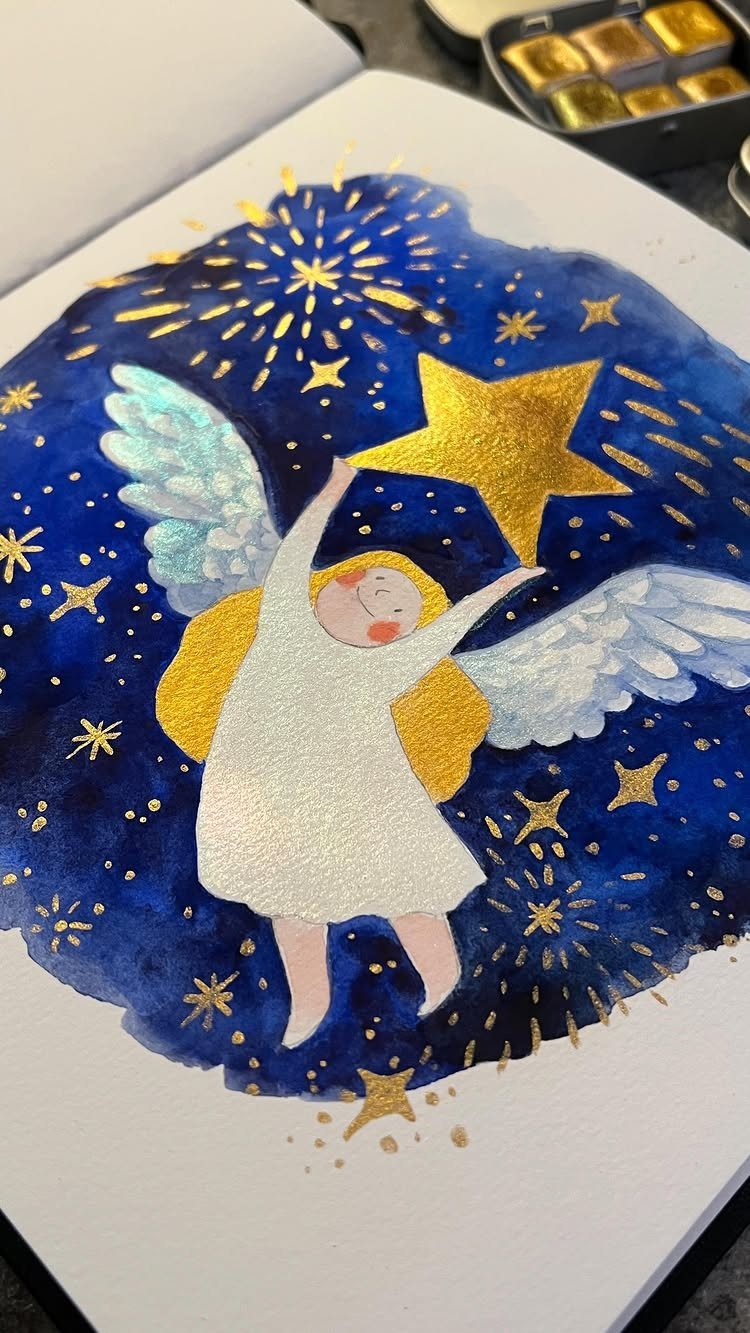
An angel card asks for more steps than the others, but the order makes it manageable. Wash the dark blue sky first and let it dry, then paint the figure in light colors on top.
A small angel with simple features hides mistakes better than a detailed one, so I would keep the face minimal.
6. Christmas Ornament Watercolour Card

An ornament is a blank shape you can personalize: change the color, the pattern, or the greenery tucked behind it. A solid yellow bauble with a few pine needles and red berries is the quickest version.
Paint the round body in one wash, then add the needles with a thin brush after it dries. I like swapping the ornament color to match each recipient, which turns one design into a whole set of cards.
7. Winter Landscape Watercolour Card
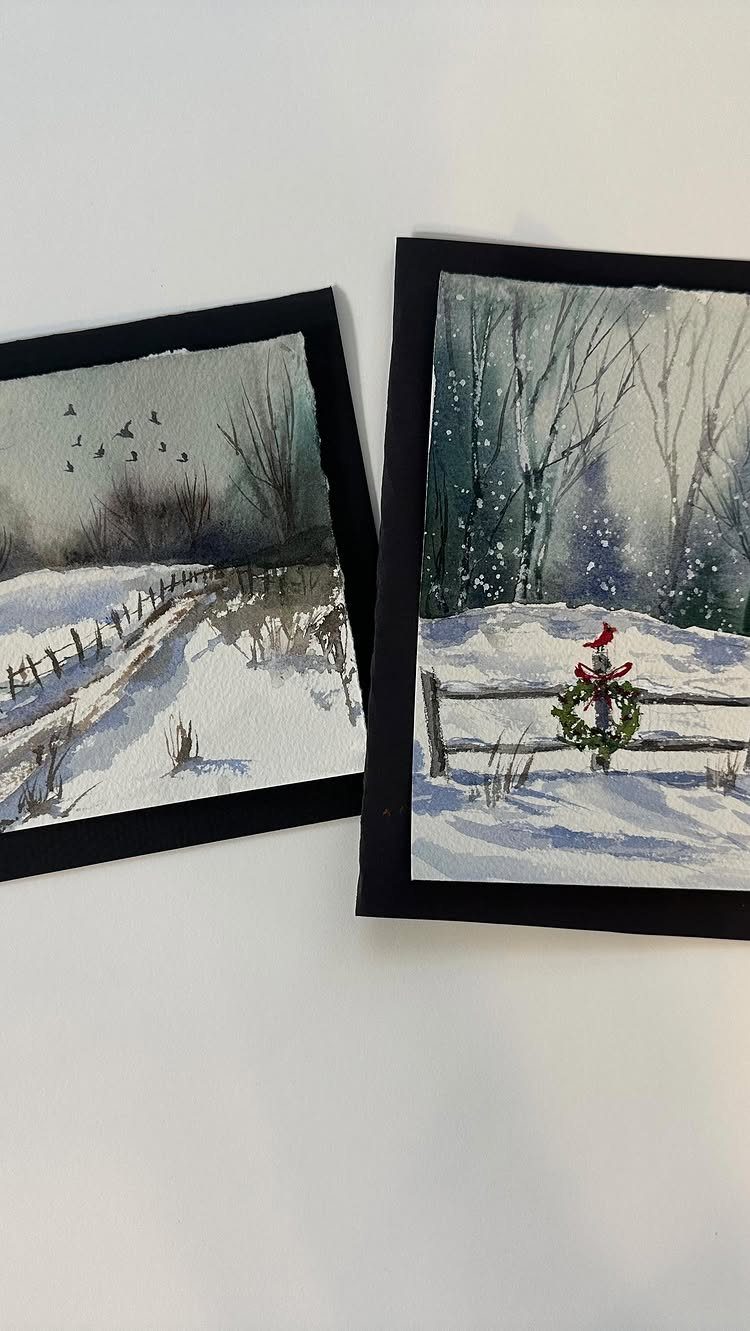
A snowy scene gets its depth from the order you paint it. Lay a pale gray-blue wash for the sky, then add the distant trees and fence in lighter tones, and save the darkest marks for the foreground.
Leave the snow as bare paper wherever you can.
A small red bird or a wreath on the fence is the one spot of strong color, so I would keep everything else muted. Mounting the painting on black cardstock, as these two are, makes the whites look brighter.
8. Watercolor Gift Tags Christmas Cards
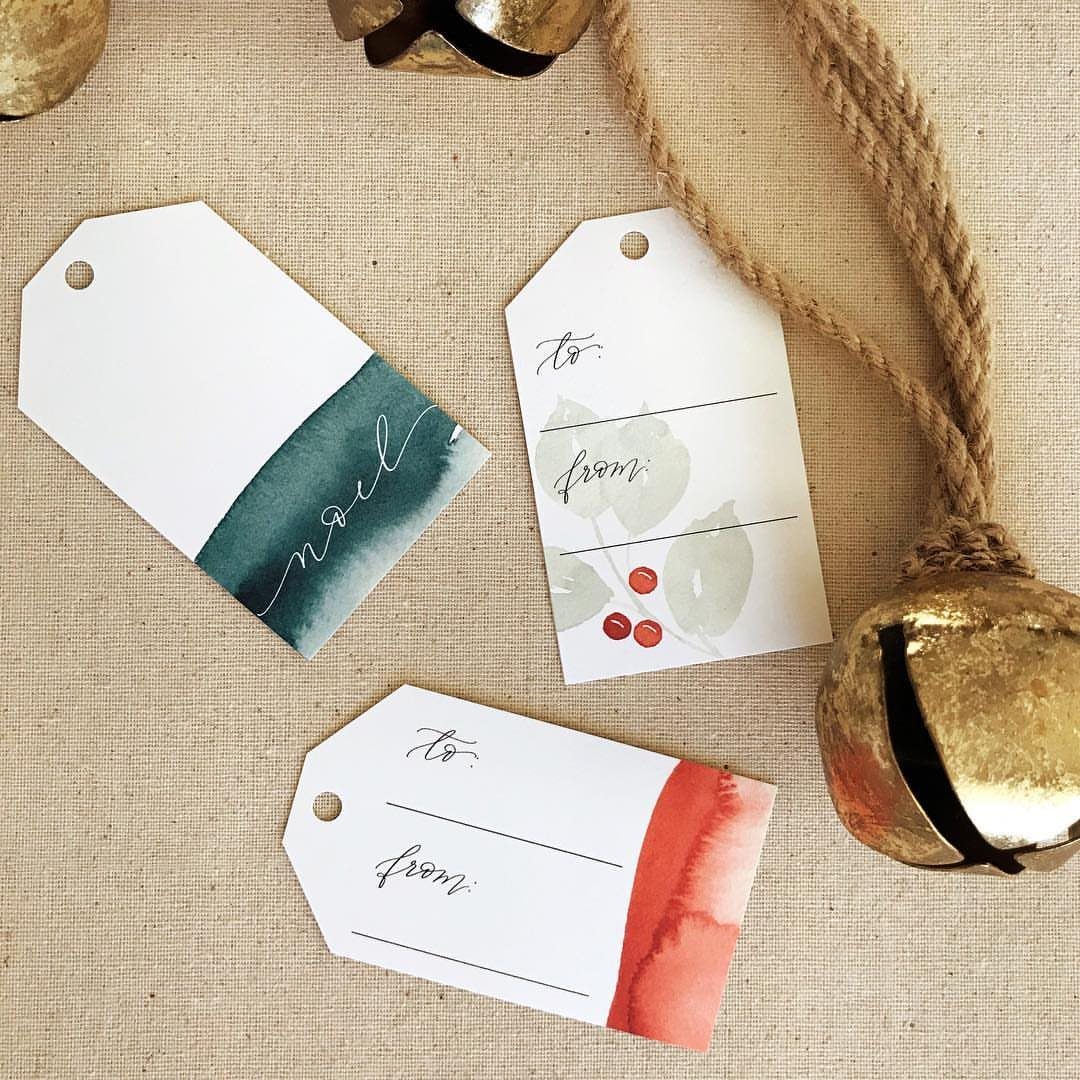
Gift tags are the smallest watercolor project you can try, and the forgiving size is the appeal.
A single green sprig, a red shape or a few berries fills the tag in a minute or two, so you can paint a whole sheet while the first ones dry.
Leave a clear space for "to:" and "from:" and write those in pen once the paint is dry.
Pick one or two colors and repeat them across the set so the tags match each other, even if the designs differ. Tie each tag on with twine.
Supplies Needed for Watercolor Cards
Paper decides more than paint does. A 140 lb watercolor paper takes washes without buckling, and precut blank watercolor cards save you the trimming if you’d rather skip it.
A basic 12 pan watercolor set is plenty, and whatever set you already own works.
Liquid watercolors also work and give stronger color. For brushes, a size 2 and a size 6 round cover fine detail and broad shapes; a flat brush helps with larger washes.
Add a paint palette for mixing, plus painter’s tape and a wooden board if you want the paper held flat (both optional).
For tracing a design, use graphite paper, or tape the pattern and paper to a window.
Keep the pencil light, and a kneaded eraser will fade lines until they are faint but still visible. Once the paint dries, a fine-tip pen that won’t bleed through the paper lets you add clean outlines or lettering.
Techniques for Watercolor Painting
Wet-on-wet means brushing clean water onto the paper first, then touching in color. The paint spreads on its own and softens at the edges, which works well for skies and soft backgrounds.
Layering is the opposite habit: let each coat dry, then paint over it. Dry layers keep their edges, so you get depth without muddy color.
Test both on a scrap of the same paper before touching a card. Wet paper changes how fast color travels, and a minute of testing tells you how much water your brush should carry.
Start light. Watercolor is easy to deepen and nearly impossible to lighten, so build darker tones in second and third passes.
Tips for Beginners
Pick one simple shape and paint it several times before moving on. By the third card your hand knows how much water to use.
Tracing a template gives you a clean outline, so all your attention goes to the color. I think that’s the best way to get a card you’re proud of on the first try.
Paint a few extra blanks, because one will go wrong. Keep the spares for practice or for tags.
Hold off on pens and lettering until the paint is completely dry. Rushing that step is the most common way to smear a good card.
Frequently Asked Questions
What are some DIY watercolor gift ideas?
Hand-painted gift tags are the easiest place to start.
A quick wash of green for a sprig or red for a berry means each one takes a minute, and working on multiple cards at once lets earlier ones dry while you paint the next.
Painted ornaments work too, and so do cards in a matching set. Loop twine through the hole and add your recipient’s name in pen after the paint sets.
What are some simple Christmas card ideas?
Mistletoe is a good pick: paired oval leaves, a few bare-paper berries and one red ribbon. A stylized tree made of a few overlapping blue and green strokes is just as easy to repeat across a batch.
A plain ornament in a single wash, with pine needles and berries added after it dries, also works. All three rely on simple shapes, so they forgive shaky brushwork.
Can I use watercolor on a card?
Yes, as long as the paper can handle it. Precut watercolor cards eliminate the need to trim paper yourself, and 140 lb stock holds wet pigment flat without warping.
Wait until the paint is fully dry before adding pen lettering, or the ink may smear. A pen with archival ink stays sharp on top of dried paint without feathering into the fibers.
What is the golden rule of watercolor?
Start light and build up.
Letting each layer dry before the next keeps edges crisp and color clean. A test stroke on scrap paper from the same pack tells you whether your brush needs more pigment or more water.