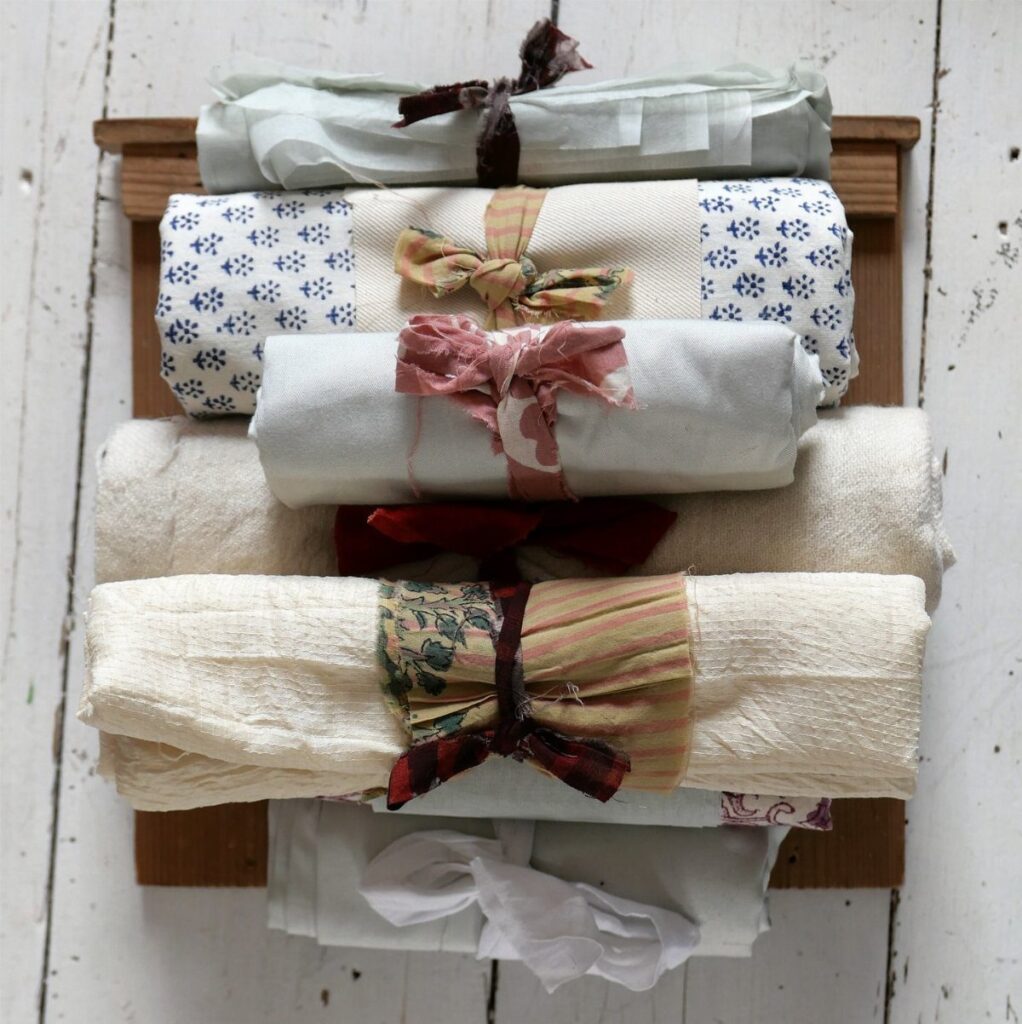
The wrapping here runs from plain paper to fabric, with bags, ribbons and bows, kraft with natural toppers, and a step-by-step wrap for a box all in the mix.
What picks one for you is the shape and destination of the present: a box takes paper, an awkward item takes a bag or a roll-and-tie, and a gift handed over in person can wear a fabric wrap that gets reused later.
1. DIY Gift Wrapping
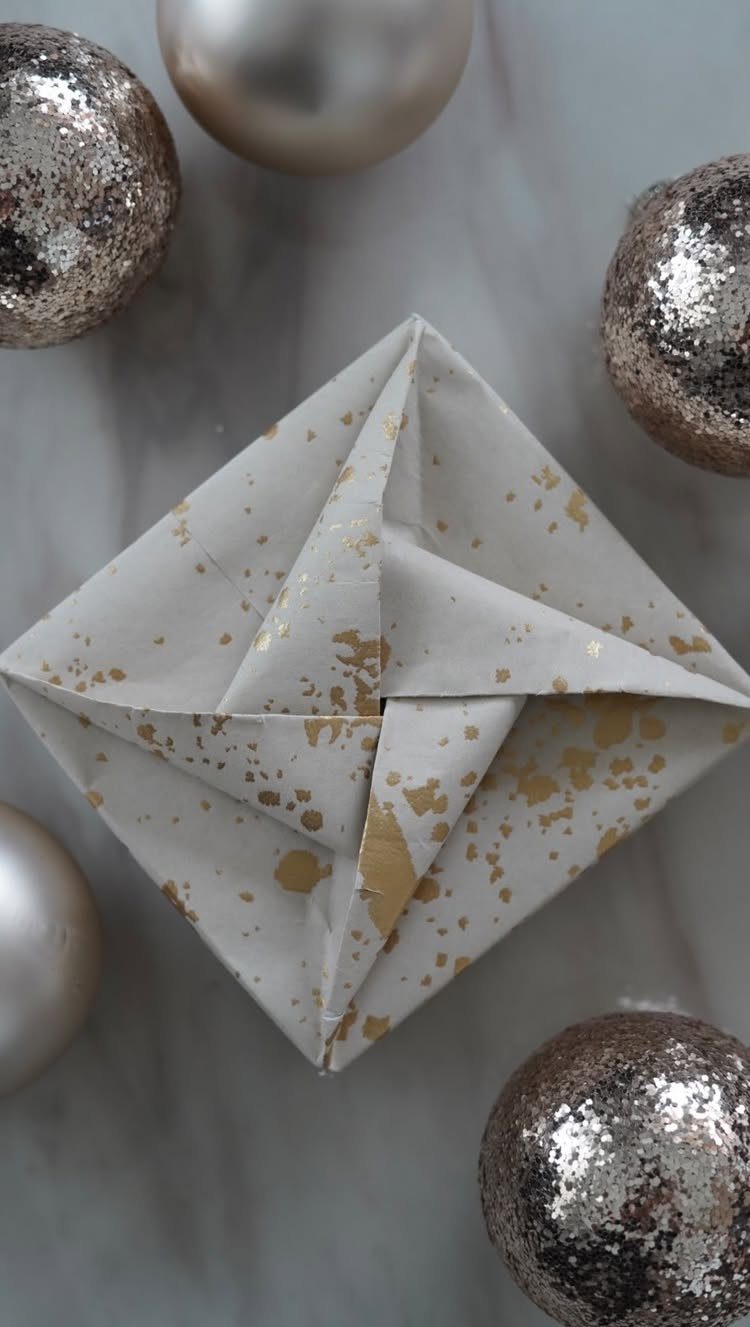
Paper with gold splatters looks hand-finished, and you can get that look from a toothbrush, a small pot of gold paint and a sheet of plain white paper.
Thin the paint slightly, flick the bristles with your thumb, and let the sheet dry flat before you fold.
A square sheet suits the origami-style fold best. If the paper is rectangular, trim it to a square first so the points meet cleanly.
I would test the splatter on scrap paper first, since one heavy drop can’t be undone.
2. Gift Wrapping Without a Box
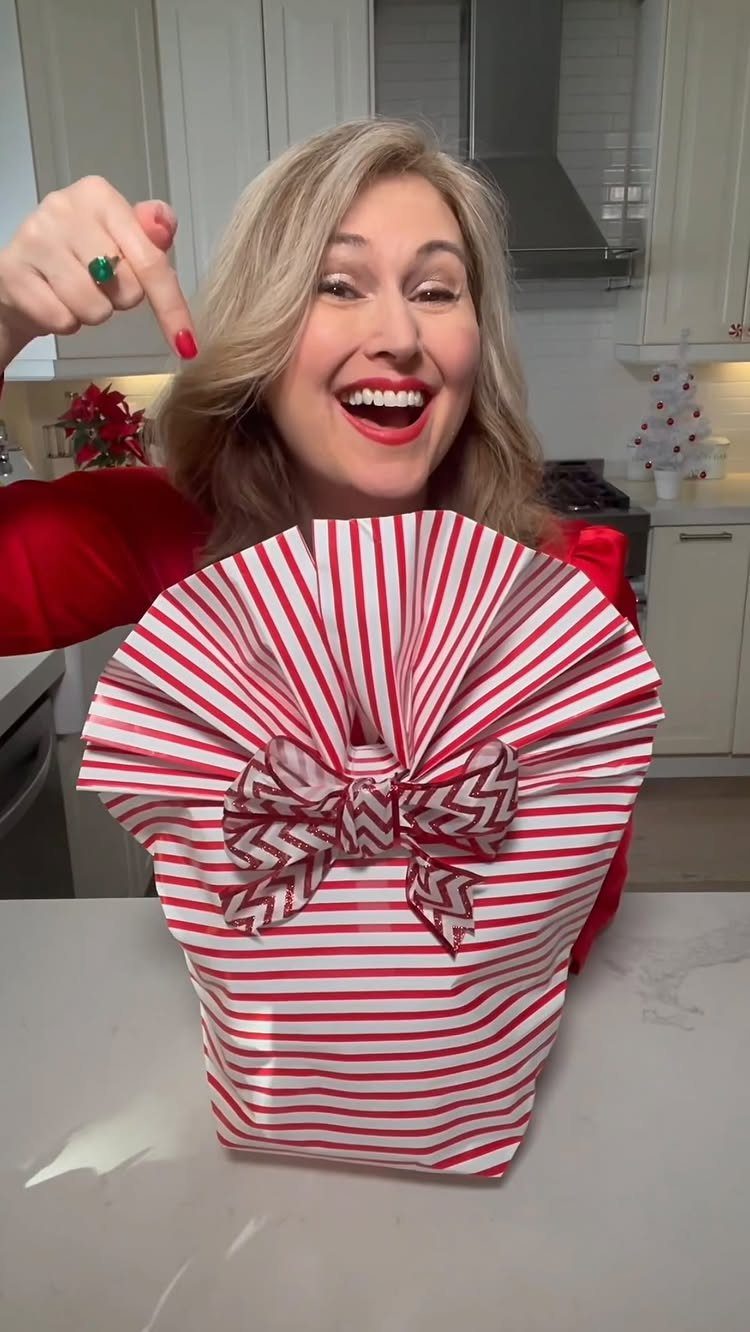
Odd shapes don’t need a box, and a bottle, a rolled scarf or a kitchen tool can wear striped paper just as well. Roll the paper around the item, tape the seam, then gather and tie each end.
Paper with a bold stripe, like red and white, hides small wrinkles better than solid colors. Match the bow to one of the stripe colors so the whole thing looks planned.
Skipping the box also saves money, which helps on a tight list.
3. Ribbons and Bows
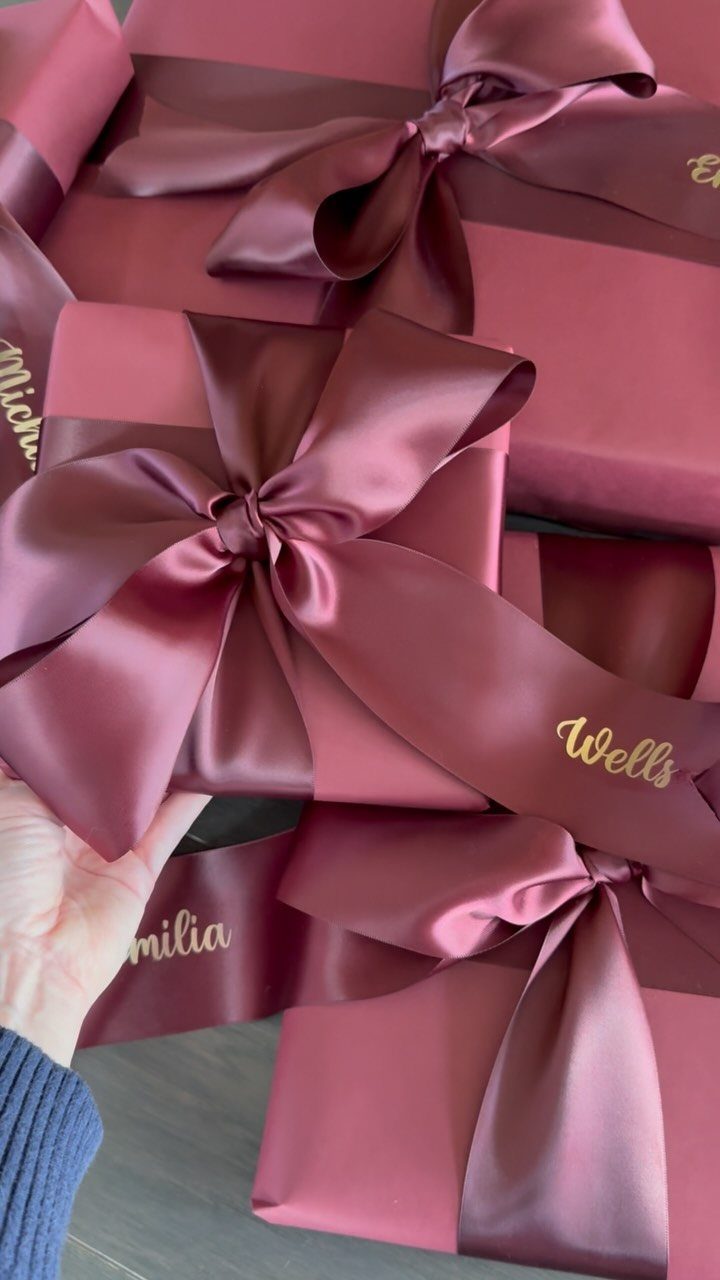
Satin ribbon with a name printed in gold script does the job of a gift tag, so you can skip the tag entirely.
A tone-on-tone look, with ribbon close to the paper color, reads as more considered than a contrasting spool.
Wide satin makes a fuller bow than thin ribbon. Cut generously, since a short tail ruins a bow.
Personalized ribbon costs more than plain, so I would save it for the gifts that matter most and use plain satin on the rest.
4. Christmas Wrapping Paper
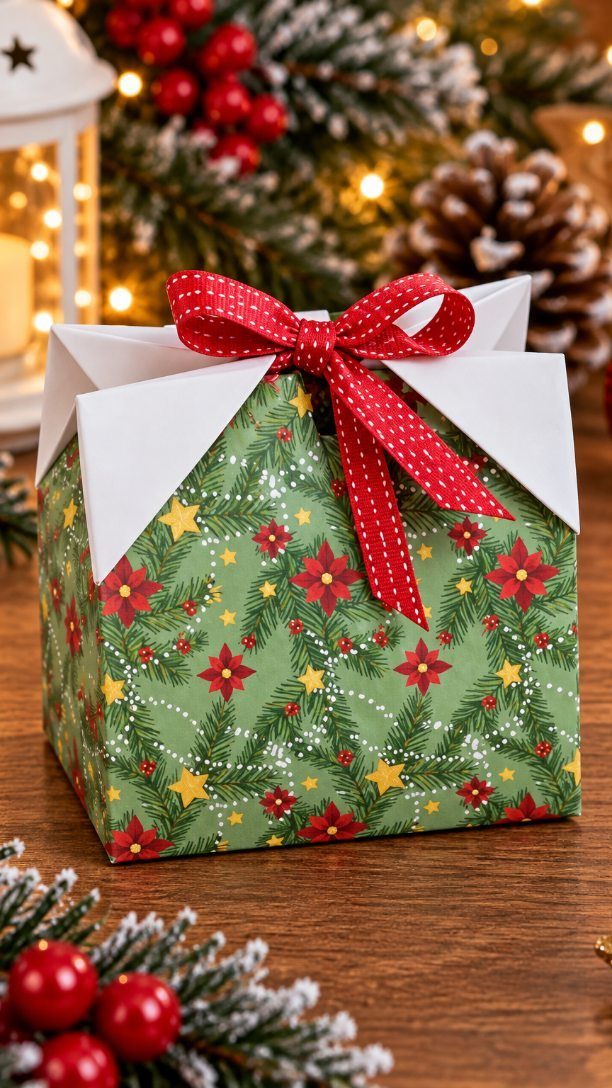
Printed Christmas paper does most of the work by itself, so keep the finishing simple.
Choose a print with a small repeat for small boxes; large motifs get lost on a tiny package. Fold the edges crisply and use double-sided tape so no tape shows.
For a traditional look on a budget, a single good roll beats several mediocre ones.
Disney Mickey Mouse in Wreath on Red Jumbo Christmas Wrapping Paper Roll, 70 sq. ft.
— Hallmark
5. Gift Bags
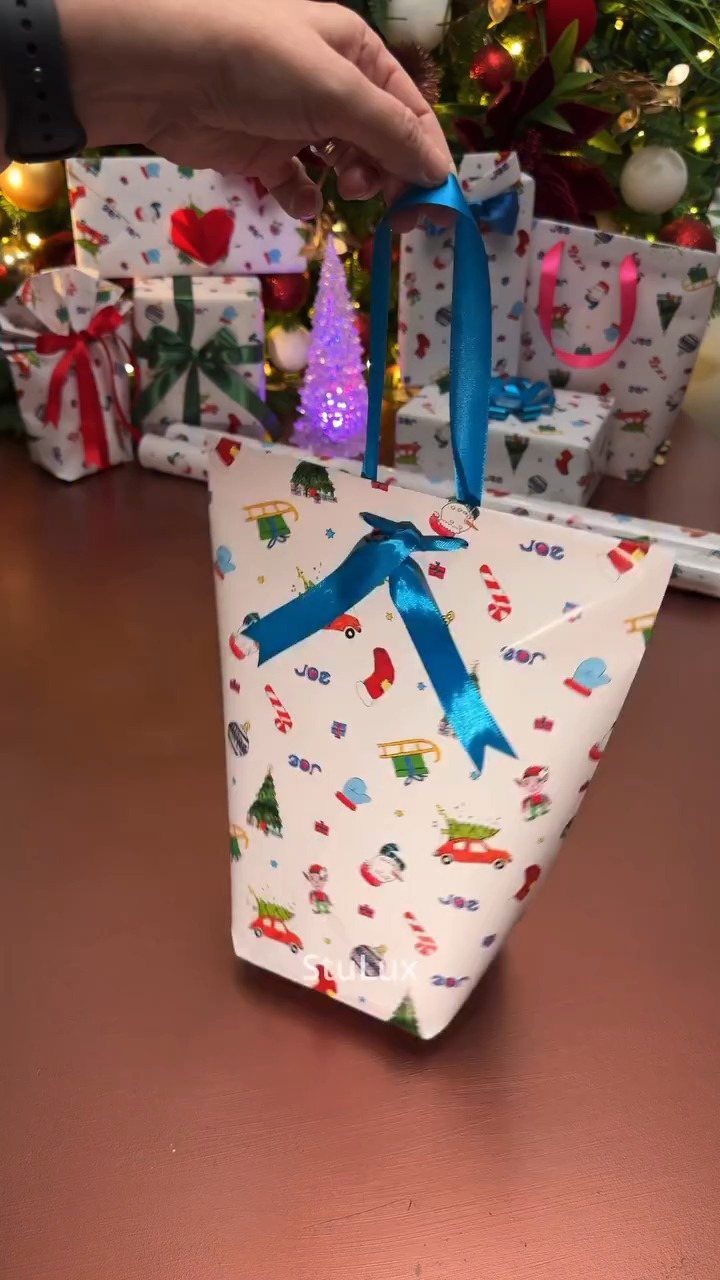
Gift bags are the fastest way to finish a present, and a white bag with a holiday print needs only a ribbon to look done. A blue ribbon tied through the handles adds a custom touch in about a minute.
Stuff tissue paper in first, then set the gift low so the bag stays balanced. Skip tissue if the print is busy.
Bags suit awkward sizes and anyone who dislikes cutting paper. Without that ribbon, a store-bought bag can look generic, and that is the one real drawback.
6. Fabric Gift Wrapping
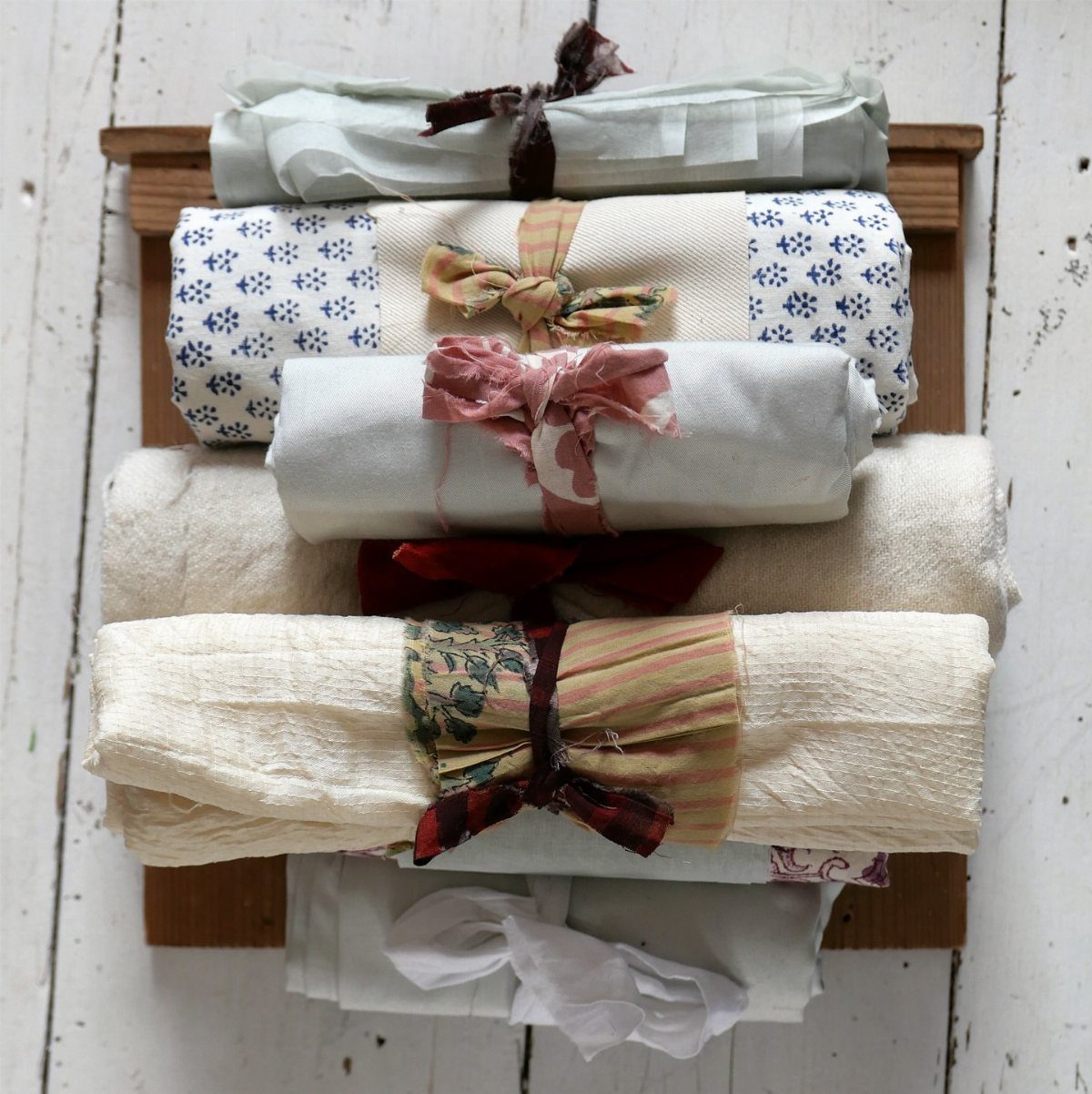
Furoshiki is the Japanese method of knotting a square of cloth around a gift, and light fabrics in cream or pale tones give it a soft, rustic feel.
The wrap becomes part of the gift, since the recipient can reuse it.
Start with a square cloth, set the gift at the center, and tie opposite corners over the top. Add a fabric ribbon for color.
Fabric costs more than paper up front, but nothing goes in the trash. I would use it for gifts you can hand over in person.
7. Kraft Paper with Natural Toppers
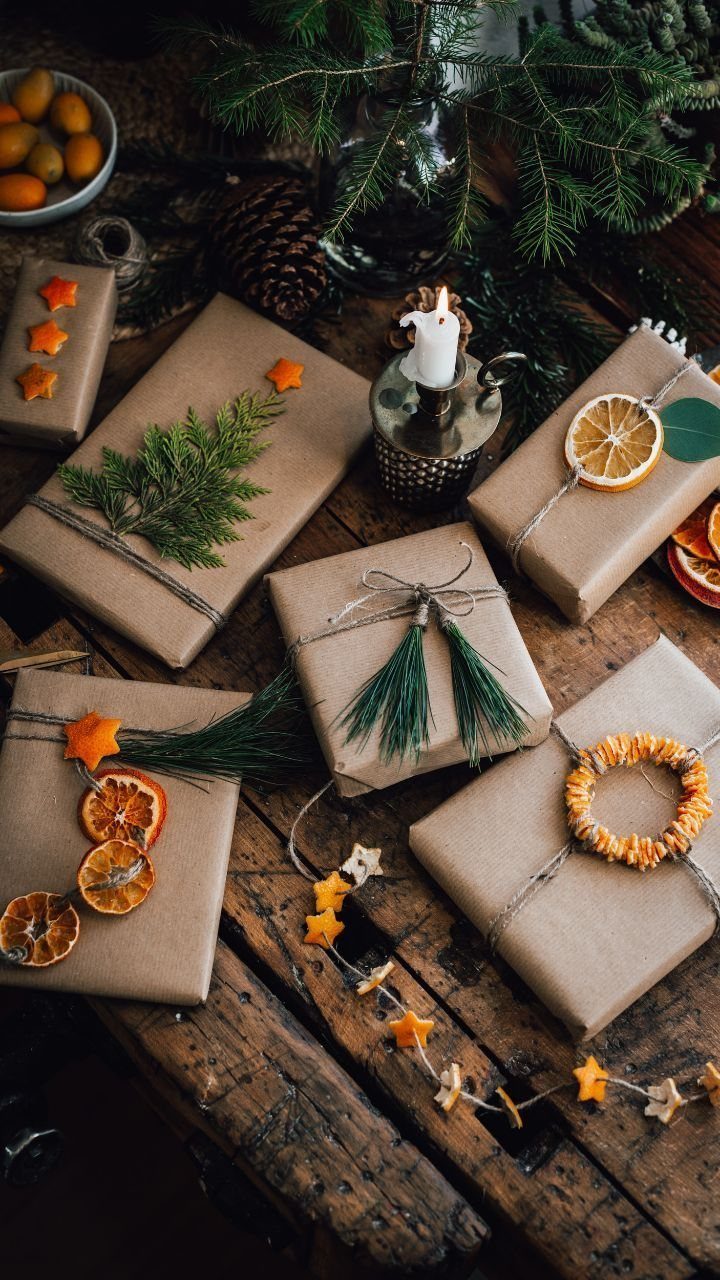
Brown kraft paper is cheap, forgiving and quietly handsome, and the toppers do the decorating. Twine tied around the package holds a dried orange slice and a pine sprig against the paper without any extra tape or ribbon.
Slide the stem of the sprig under the twine knot, then tuck the orange slice beside it so both sit snug. Dried slices are brittle, so handle them gently and add them last.
Kraft paper suits a tight budget and anyone who wants a look that needs no printed paper.
Add the toppers just before gifting if the gifts must travel, since the pine and the orange slices are the parts that can get crushed.
How to Wrap a Gift Step-by-step
Clear a table or floor first, because a lint-free flat surface keeps the paper from creasing.
Set the gift face-down in the center of the sheet, pull one side of the paper up and over the box to check how much you need, then cut so the two sides overlap with room to spare.
Anchor the paper to one side of the box with a strip of tape, then pull the opposite edge up and over the top and press it down with a second strip.
A neat crease along each edge makes the box look sharp.
At the ends, tuck the paper into triangle-shaped folds at the corners and tape them shut. Wrap the ribbon last, then add any embellishments.
Measure the paper so it runs past the box on both ends by at least half the box’s height, since a sheet that only matches the width leaves the sides bare.
Too little there is the most common reason a corner gapes.
Choosing Wrapping Materials
Start with the budget, then pick the look. Paper is the cheapest to buy, fabric costs more but can be used again, and natural elements fall somewhere in between depending on what you already have around the house.
Fabric wraps, kraft paper and newsprint can be reused or recycled, which makes them the easiest picks for cutting waste.
Plain paper wrapping and uncoated paper bags can usually go in the recycling bin, though bag handles should come off first.
A good bag also has a second life in the basement closet, ready for next year. I think that is the easiest sustainable habit, and it costs nothing.
Creative Gift Presentation
Sometimes the best wrapping is not wrapping at all. Present the gift in a container that is lovely in its own right, such as an antique basket, a hat box or a beautiful piece of textile.
I would match the container to the gift: a hat box suits something soft or flat, while a basket handles a group of small items well. Line it with tissue or fabric so the contents sit snug and look intentional.
Coordinating the theme across every present, with the same ribbon or the same embellishment, makes a pile under the tree look like one idea.
Frequently Asked Questions
How do you perfectly wrap a Christmas gift?
Lay the box face-down on the sheet, bring one edge up over its side to gauge how much paper you need, then trim so the two edges meet with a little extra to spare.
How do you wrap Christmas gifts sustainably?
For the least waste, I’d pick fabric, kraft paper or newsprint, all of which can be used again or tossed in the recycling.